Deconstruction of Video Games
Video games are actually beneficial for you or are they just a time waster? Is it morally correct to create video games or do they trap people in addictive cycles no matter the content? This article will not decide for you but it will inform you what you should know about video games.
Conversation
I was having a conversation with someone. They asked me how I am able to support the video games industry, when it is known that video games addiction is a serious problem for some. Games are purposefully made for you to spend more time playing the game and by extent they are using your time. I answered with that there are many people working on a game, people that make 3 dimensional (3D) models, environments, concept art, soundtracks, there is a lot of creativity being put into video games, surely that's not a bad thing? Well... those all serve the purpose of helping the addiction part of the game be better and better and pulling people in.
I could not understand the point of view they were trying to make, there are also people that the addiction is not a problem for, and other activities such as rock climbing and body building can also become an addiction. I also made the point that not all games are made with the intention of trying to lock down your time and squeeze out as much energy and money, some of them are made with the intention of spreading stories, experiences, and expressing oneself, however sadly this is a lie which I later came to understood.
So anyway we continued the conversation, and replied with; so then films, books, music, art, and video games are all bad because there is a cause for addiction problems? All of these mediums are just used to manipulate emotions thus all creativity is deemed bad now because of the potential for addiction? No more expressing yourself would be possible, because now it would be deemed a detriment to humanity that you are manipulating emotions. They said that if there are people that are addicted to any of those then it is also a problem, but said that I was dramatising and being hyperbolic to make the argument look stupid, when in fact that was not my intention but to get to the root of the argument itself by abstracting the reasoning behind it. See the fundamental problem with our conversation was that we had two separate understandings of video games. On one side I was including video games into creative expression whereas they were not, and such they did not have a problem with other forms of creative media.
I then came in with my final ace for countering the whole argument potentially winning it. So what about Wii Fit?, which is a activity based game. Is that considered bad as well as a video game? Well, yes it still is, as it is better than other forms of video games, but it dwarfs in comparison to actually going outside and running or working out, which you can even do with other people. Sure it is easier to exercise on the Wii than to go out running in the rain, but it is a shallow replacement for activities done in reality.
At this point the conversation stalled as I ran out of counter arguments and they were done talking. However I was not convinced by them. It felt wrong to accept their point of view, like they did had something useful to say and it felt correct one a hazy level, but accepting it outright would be just as incorrect as saying that video games were harmless in moderation. So I sat down and started thinking about it. The first realisation was the above on how we had categorised video games differently. However there was still this nagging feeling. It also did not seem correct to say that it's the people's who play games responsibility and problem that they can not moderate themselves, because this seems like an argument a drug dealer would be saying as well about how they are not at fault for people buying their products. And then it clicked together, except for the fact that this is about the deconstruction of video games so it would be better to say that it fell apart and was able to now look using a more objective lens on video games.
Dissociation Factor & Dopamine
Before we move on, I would like to mention what the dissociation factor is and how dopamine is created when playing video games.
First the dissociation factor, it could also be called the absorption level, the immersion level, or the presence level, they all essentially relate to the same concept which is how much is the persons mind able to "zone out" or forget about their body and the real world. For example a book would have low dissociation factor to it, while a virtual reality (VR) game would have one of the highest dissociation factor.
The dissociation factor causes the mind to wander into a different world which can in turn cause the mind to discover a whole slew of different experiences, ones that potentially would not be able to do in the real world otherwise.
Second is the dopamine gained from not just playing video games but also from other forms of media consumption. This type of dopamine is the short term easily accessible type gained from repeatedly completing the small tasks that the video game gives you. The problem with this, as I will later expand on, is that dopamine is used for, and useful for, working on tasks and improving your life. However this is rarely achieved as the world you are working in is fake.
Now if we take it that you are putting your time and energy into participating in a fake world caused by the dissociation factor and are even rewarded for it through your dopamine generation you will get a very effective self feeding cycle. This can be the so called video game addiction or the internet gaming disorder. Some articles are linked at the end for further reading into the subject.
Deconstruction
So let's deconstruct what video games are, this is a broad overview of video games in general, not all of video games have all of these components. The following are the building blocks of video games, 3D models of the player, characters, enemies, the environment, and objects, 2 dimensional (2D) textures, pictures, sprites of any characters or enemies, the story, the musical soundtrack and other sound design, animations, lightning and atmosphere / ambience and the functional code i.e. the mechanics of the game that brings the whole idea together into one interactive experience. As previously said some of these are also present in other forms of entertainment, models, animations, pictures, in films, music in songs and films, and stories in books, films and sometimes songs. All of these lack the program code that makes the medium itself interactive though which sets video games apart from the others. There are technically books and films in which it is possible to choose the way the story progresses giving interaction, however these are a bit different from video games and will be returning to later on.
First we'll look at the general outline of video games and then take some examples from different genres. The general structure of video would be as follows. You start of with a world for the video game to take place in, the environment, lightning, places, people and physical laws, this is essentially the stage of a play. There most likely be some sound design and music sprinkled in the background. Next you have the player controlled character who may or may not be the protagonist of the story. You then have some sort of objective given to the player that they need to work towards in order to be given a reward or to progress in the story. Seems innocuous enough, right? Let's look at the previous sentence. "You then have some sort of objective given to the player that they need to work towards in order to be given a reward or to progress in the story." That's the problem right there.
See let me talk through the life cycle of a video game. You start of by buying the game and executing it. Then the main menu opens and you select the start game button, initiating a new save file for your game. The game opens with a cut scene, layout of the world is shown, characters are introduced, tone of the game is set, and you are finally gotten to the game play section, so the fun starts now, this is however not as fun as it seems like. What the next section of the game entails is that the developers of the game have put a lock on the progress of the game, be it the next section of the story, new weapons, vehicles or characters to use. This lock is thought to be essential for video games. The players must be made to work for their rewards. It would be quite strange if you just bought a game and all of the characters were already unlocked from the very start, even the powerful ones from the end of the game, they all have their max weapons and max abilities. But that would ruin the game play, all of the content of the video game would be easy. I play this game because I want to think about how to solve the challenges that have been put there for me by the developers. That is simply not fun though. You are given a series of challenges that you have to work through, the purpose of these challenges is to make you work for the reward at the end of it creating an even greater incentive to continue working on them as a result of the sunk cost fallacy. But what if I enjoy working hours towards a small little pop-up on my screen with no real world consequences. Then I say it is perfectly fine for you to get some dopamine in that way if you want, however I do not believe that so many people are satisfied with living their daily lives in a false bubble of reality, doing work in imaginary worlds improving the lives of characters which have no consequences after the power plug is pulled from the socket, leaving only a memory in the mind of the player of the hours of work that they have put into the game.
Results
That's it, there is nothing more. All the player does is that they work toward something which is changing some values in a save file or in a database somewhere. Hours and hours of time go towards this, a number getting incremented for your score or progress, or a change of boolean values such as whether you have achieved a certain part of the game or gotten a certain costume. You know they are called skins.
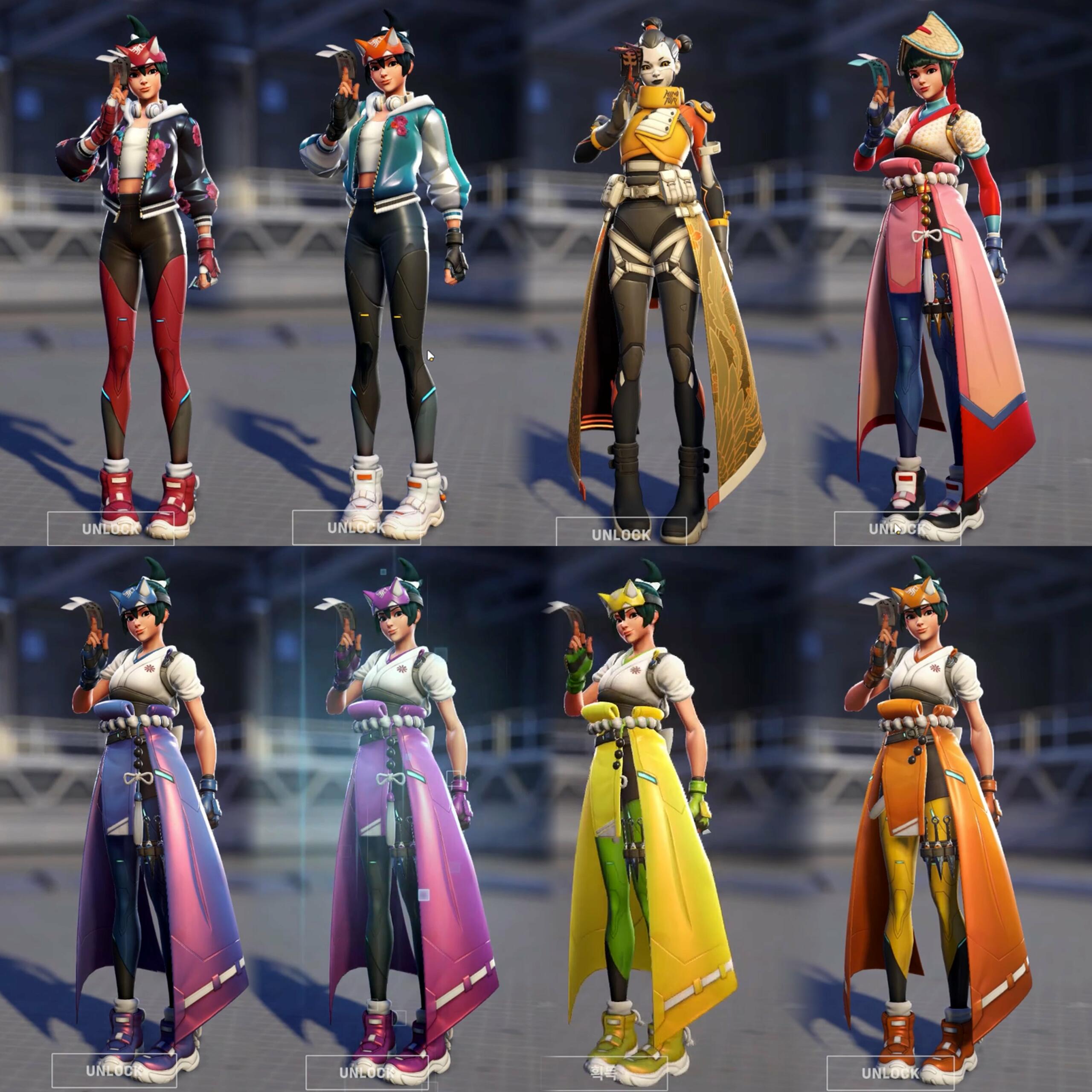
No this is clearly a costume, or I guess to be more precise to say an outfit, and it is definitely not a skin. It does not matter what video game developers try to say these are outfits not skins, unless you are actually changing your skin colour / texture of your character.
So yes by spending time in video games you get three rewards, the temporary dopamine from achieving tasks in said game, the memory of you spending time working towards achieving that task, and the result of the task itself, a value change in a save file, and then again you don't really get the save file itself because if the company who has made the game decides to shut it down it will be gone. However you have not made any contributions to the people around you or the environment, the only thing that you may gain from video games is personal growth through the memories of struggle in achieving the tasks set out by the developer, which we'll look at what these are for the different game genres.
Genres
For every genre I will now mention beforehand so that I don't have to repeat myself, video games allow for a low cost and low level experience of an event or activity. This may be useful in some situations, for example if you play a racing game, it will never feel like racing in real life, you will not experience the activity in such high level as in reality, but it may allow you to experience it at all at such a low cost. However I encourage you to instead seek out the real world experience equivalent of games you play to better experience the activity. But there is no Formula 1 race track near me, or there aren't any dungeons I can explore and overcome enemies. For most activities you can start small, for example find a go-karting track instead, or go out into a local park and start identifying plants, birds, insects, et cetera. This argument sounds a bit like the horse saying that the river we have arrived at is not made of pudding like the one it saw in the computer. I completely agree, this is a river made of water not a golden stream of delicious dessert, but once you have tasted the water in the river you are ready to start working towards, improving and creating the pudding river of your dreams.
I will go through some genres based on the Wikipedia list, which has a nice round collection, and gives my thoughts on them and the replacement that they stand for from real life. https://wikipedia.org/wiki/List_of_video_game_genres.
Action
For the majority of action games you should just join some type of sports to get the same type of experience, preferably a combat sport. The only exception to this are rhythm games which you should just play an instrument it's a real life rhythm game with the best feedback.
Action-adventure
If you want action see the previous point, and if you want an adventure see the next.
Adventure
These are more story dependent games where the tasks created by the developers are usually more mentally challenging to complete, rather than the dexterity requirement and hand eye coordination required for action games.
Puzzle
These are again arbitrary tasks that developers have created for you to complete. Sure you may say that playing solitaire in a digital form is no different to playing it with real cards, after all aren't those also just tasks that someone created for you. That is true however the physical cards do not beg you to play, they just exist whereas digital games have a timer built into them pressuring you into completing them under time as your device that you are using is consuming electricity.
Role Playing Games (RPGs)
Majority of these involve character or party progression alongside the story, which would not be a problem except that in many of these games you have to "grind" i.e. spend hours of your time doing monotone tasks to get the required level gap to progress with the story. For example I was playing through Persona 4 Golden in which you have party members who need to be levelled up and bought gear for them to be stronger. I however did not want to spend hours of the game in the dungeons fighting against enemies over and over and over, so instead I lowered the difficulty of the game to the easiest and decided to run through every dungeon skipping all enemies I could. I still enjoyed the game but found it rather interesting how big some of the dungeons were, as in they were pretty boring to just walk through for multiple minutes with nothing happening. But your playing it wrong that's not how the developers intended it, they wanted you to experience the long hours the characters spend inside the dungeons battling against the enemies. If I wanted to experience long hours of hard work I could just go and do actual work and even help someone or get paid.
Simulation
Construction and Sandbox games are decent as they allow you to "play" something that can be creative and potentially productive outside of the game.
Life and job simulation… like just go outside, take a walk, and get a job.
Vehicle simulation can be two sided, either you are training for a vehicle that you will be driving in real life in which case these are great, or please see my previous point.
Strategy
Strategy games are somewhat similar to puzzle and adventure games on a core level, where adventure games may have puzzles or strategy elements in them in between the story segments, puzzle games are based on real life versions of the puzzle, strategy games can be more abstract in their game play. They can also be 2 different types, turn based or real time. Turn based is similar to puzzle, whereas real time strategy is similar to more of an action game where the live stress associated with the game is the fun aspect.
Sports
On some level this genre is very similar to the simulation genre.
Multiplayer
This involves a few different genres as many types of games can also be played with other people.
For any competitive game were you face off against others, the reasoning and advice is similar to action games, and if it's a team game to instead join and enjoy some team based sport.
For others such as player versus environment, like massively multiplayer online games and party games, the alternatives are playing physical board games.
Gambling
I would advise people not to gamble but if you do to do it physically or with people you know to increase your experience of it. You should view the money you spend on it gone and not as a source of income.
Gacha
Gacha is strange because it is very similar to gambling except with the fact that you do always get something for your money or your time that you put into gathering the resources, which is some changed values in a database. Honestly this is the same advise I have for gambling that if you set your expectations for the worst when rolling for gacha or gambling then you will only meet your expectations or exceed them.
Tamagatchi
Tamagatchi are essentially a replacement for a pet or child in terms of having to "care" for it every day without having the downsides of actually putting time and effort into actually caring for a living being. It's similar to caring for a plant except it requires electricity whereas a plant generates oxygen and brings colour to a room.
Narrative & Visual Novels
The final game genre narrative and visual novels. These can range from narrative games with the focus being on the story with tasks you must complete to progress, which is similar to how RPGs work, to visual novels, some of which only require you to press start, and turn auto continue on, potentially sometimes requiring a few choices you make to change the direction of the story.
Visual novels in this regard are very similar to a movie or book as their game code is minimal for interaction. However do not be fooled as there is still some amount left they do technically have some repeatability value, although once you have read all of the routes of the story there is nothing more to do with them.
In essence these make the most amount of sense as you are buying 6 or so books, depending on the route and content type, that you read, which I see no problem with. The only problem with these is the overpriced merchandise you can buy, but that is really there for most form of media.
Support games
Finally we have the last category I would like to talk about which is that games can help in the support of people either in therapy or with self improvement and I would not like to disregard these positives. Even though the immersion factor of video games may be high it may not necessarily be a bad thing.
Streamers
This will only apply to video game streamers not any other types. Now you will be one of the following types of people to watches streamers;
- a person who enjoys the streamer suffering through a game,
- you don't have money or time for the game or want to get the game so you get a feel for it,
- devoid of human interaction you watch the streamer or streamers all playing together to form a para social relationship with them, making it feel like you have some connection with them, in this case you probably don't even care about the game they play and instead are attracted to the streamer or streamers instead,
- you perhaps need some sort of noise in the background to work and just turn on some streamer of a game you play, for this I recommend listening to binaural beats instead, I recommend that to everyone actually,
- or maybe you are bad at a certain video game and by watching someone else beat the video game you feel some sort of accomplishment for all the work they put in,
- finally you know the person irrespective of their streaming so you watch them or even play together with them, which is basically hanging out with them.
Now that you have seen the list above, you should be able to categorise yourself (if you watch streamers) to figure out why the reason you watch them, and whether you want that.
You Choose
I do not want to dissuade you from video games as a whole, you can choose what you do in life. If you find a game fun or challenging then pursue that. I just ask you to be more conscious about what you play and what do with your time. After having a think through video games, my wish list for new games and my backlog of what I wanted to play through basically halved, I didn't stop playing altogether but I got rid of anything which I now not value spending my time on and instead focus on other activities.
Articles & Studies
- https://www.washington.edu/news/2022/05/23/people-enter-a-dissociative-state-when-using-social-media/
- https://pmc.ncbi.nlm.nih.gov/articles/PMC6003028/
- https://www.researchgate.net/publication/331022925_Dissociation_in_Problematic_Gaming_a_Systematic_Review
- https://pmc.ncbi.nlm.nih.gov/articles/PMC6876823/